Small Home Changes That Improve Safety — Without Making It Feel That Way
Most homes weren't designed with aging in mind. They were designed for convenience, for style, for the way life looked at a particular moment in time. And for years, that works fine. Then gradually, the things that never mattered start to matter — the rug that shifts underfoot, the hallway that's hard to navigate at night, the bathroom that requires more balance than it used to.
The good news is that the most effective safety changes are also the least disruptive. You don't need a renovation. You don't need to turn someone's home into something that looks clinical or institutional. Most of what actually makes a home safer takes an afternoon, costs very little, and when done well, blends right into the space.
Start With Lighting — It Does More Than You Think
Poor lighting is one of the most underestimated safety risks in the home, and it's one of the easiest to fix. As eyes age, they need significantly more light to see clearly — especially at night and in transitional spaces like hallways, stairwells, and doorways.
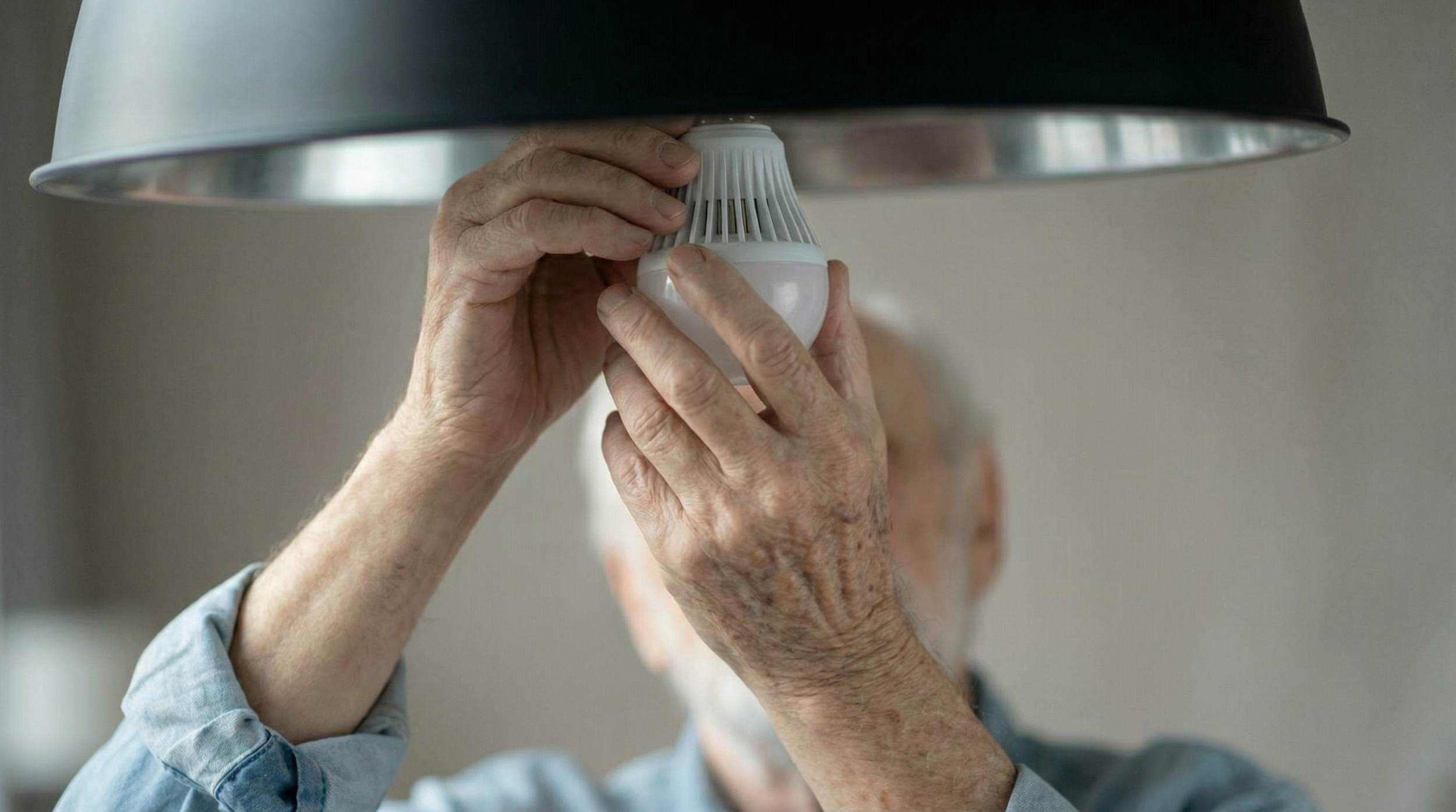
Swapping out dim bulbs for brighter LEDs is a five-minute change that can meaningfully reduce risk. Motion-activated night lights in hallways and bathrooms mean that a 2 a.m. trip to the kitchen doesn't require finding a switch in the dark. Under-cabinet lighting in the kitchen makes it easier to see what's on the counter and the floor.
None of this looks like a safety modification. It just looks like a well-lit home.
Pay attention to the areas that get used most at night or early morning — those are the highest-risk moments, and better lighting there makes a real difference.
Floors and Pathways: The Changes Nobody Notices
Loose rugs are one of the most common causes of falls at home, and they're also one of the most common things people resist removing. A rug that's been in the entryway for twenty years feels like part of the house. Suggesting it come up can feel like an overreach.
One way to approach it: non-slip rug pads underneath change the risk profile significantly without removing anything. For rugs that curl at the edges — the ones that catch a foot mid-stride — double-sided tape or replacing them with low-profile alternatives is a quiet fix that doesn't require a conversation about safety at all.
Beyond rugs, look at pathways. Is there a clear, unobstructed route from the bedroom to the bathroom? From the couch to the kitchen? Furniture that made sense years ago can gradually create a subtle obstacle course. Moving a side table, angling a chair differently, clearing a corner — these are small shifts that open up space without changing the feel of a room.
Electrical cords that cross walking paths are worth rerouting. A cord running across a doorway is easy to step over a thousand times and trip over once.
Bathrooms and Bedrooms: Where It Matters Most
The bathroom is statistically the most dangerous room in the home for older adults, and the bedroom is where most nighttime falls happen. Both deserve a close look.
In the bathroom, non-slip mats inside and outside the shower or tub are a starting point. A handheld showerhead makes bathing easier and reduces the need to twist and reach. A shower chair or bench, even for someone who doesn't feel they need one yet, can help make that daily task much more comfortable and safe. Grab bars, installed properly, provide real stability and can be chosen in finishes that look intentional rather than medical.
In the bedroom, the goal is to reduce what has to happen in the dark or in a hurry. A lamp or light switch within reach of the bed means no one is navigating a dark room half-asleep. Bed height matters more than most people realize. If getting up requires significant effort or a risky forward lean, a simple bed rail or adjusting the frame height can help. Clear space between the bed and the door means that an urgent middle-of-the-night trip doesn't involve stepping around anything.
Entryways, Thresholds, and the Kitchen
The front door area is worth a deliberate look. Uneven thresholds, a single step with no railing, a mat that slides can be tripping hazards that greet someone every time they come home. A simple railing on even one step adds significant stability. Threshold ramps are available for under twenty dollars and eliminate the small elevation changes that catch feet off guard.
In the kitchen, the goal is reducing how much reaching, bending, and lifting the daily routine requires. Frequently used items such as dishes, glasses, pantry staples all belong at counter height or just above, not at the back of a low cabinet or on a high shelf. A lightweight step stool with a handle is safer than improvising with a chair. An anti-fatigue mat in front of the sink and stove reduces the strain of standing.
Making Changes Feel Like the Home's Idea
The best safety improvements are the ones that don't announce themselves. When a grab bar matches the towel bar finish, when a night light tucks neatly into a baseboard outlet, when furniture is simply arranged more thoughtfully — these changes don't feel like concessions. They feel like a home that works well.
That matters, because changes that feel foreign or institutional are often quietly undone. A bath mat gets moved back. A rug gets unrolled. A grab bar goes unused because it feels like an admission.
When safety improvements feel like their home is a little more comfortable then those improvements that were added get used consistantly, making it safer, they do exactly what they're meant to do.
Start with one room. Pick the changes that are easiest to make and hardest to notice. That's usually where the most impact is anyway.